
Why Does Your Circuit Breaker Keep Tripping?
A breaker that trips is doing its job. The question is why it keeps having to. Here are the causes we actually find, from most to least common.
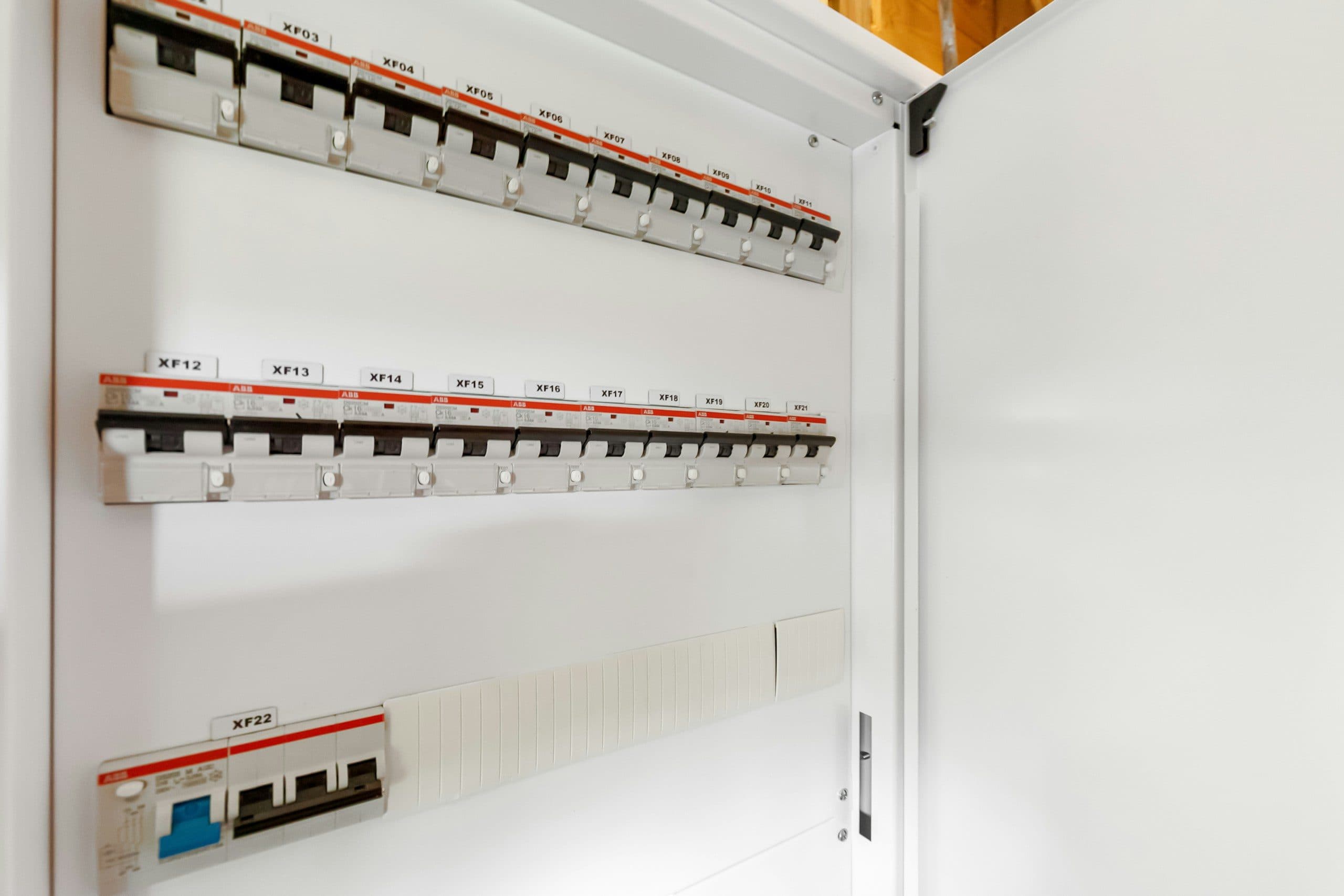
Overloaded circuit: too much on one line
The most common cause by far: the combined load on a circuit exceeds what its breaker is rated to carry, so it trips as designed rather than letting the wiring overheat. This shows up most on circuits feeding several high-draw appliances at once: kitchens, workshops, or a room with an air conditioner and other loads sharing the same line.
The fix usually isn’t a bigger breaker. A breaker sized above the circuit’s actual wiring rating just removes the protection. The real fix is redistributing load across circuits, or running a dedicated circuit for the heaviest appliance.
Short circuit: a live wire touching neutral or earth
A short circuit trips a breaker immediately and often repeatedly, sometimes the instant a specific appliance is plugged in or switched on. This points to damaged insulation somewhere in that circuit’s wiring, a faulty appliance internally shorting, or a loose connection inside a socket or junction box.
This isn’t a load-balancing problem, and it isn’t safe to keep resetting the breaker and hoping it stops. A short circuit is a fire risk, and it needs fault-finding.
Earth fault: current leaking to earth
On circuits protected by a ground fault or earth leakage device, tripping usually means current is finding an unintended path to earth, commonly through moisture in an outdoor socket, a damaged appliance cord, or a fault inside an appliance itself. This is exactly the condition these devices exist to catch, since it’s also a shock hazard.
Isolating which single appliance or socket is causing it (by unplugging everything on that circuit and reintroducing one at a time) narrows this down quickly. Then the fault still has to be fixed, or the item replaced.
A worn or ageing breaker itself
Breakers don’t last forever. One that trips at well below its rated load, or that fails to reset cleanly, may simply have worn internal contacts after years of service. This is more common on an older panel that hasn’t had any breakers replaced since original installation.
This is the one cause on this list that isn’t about your wiring or appliances at all, and it’s only distinguishable from the others with an actual panel inspection.
Scope a job with our team
Tell us what you need built, fixed or installed. We’ll look at it properly and come back with a scoped assessment.