
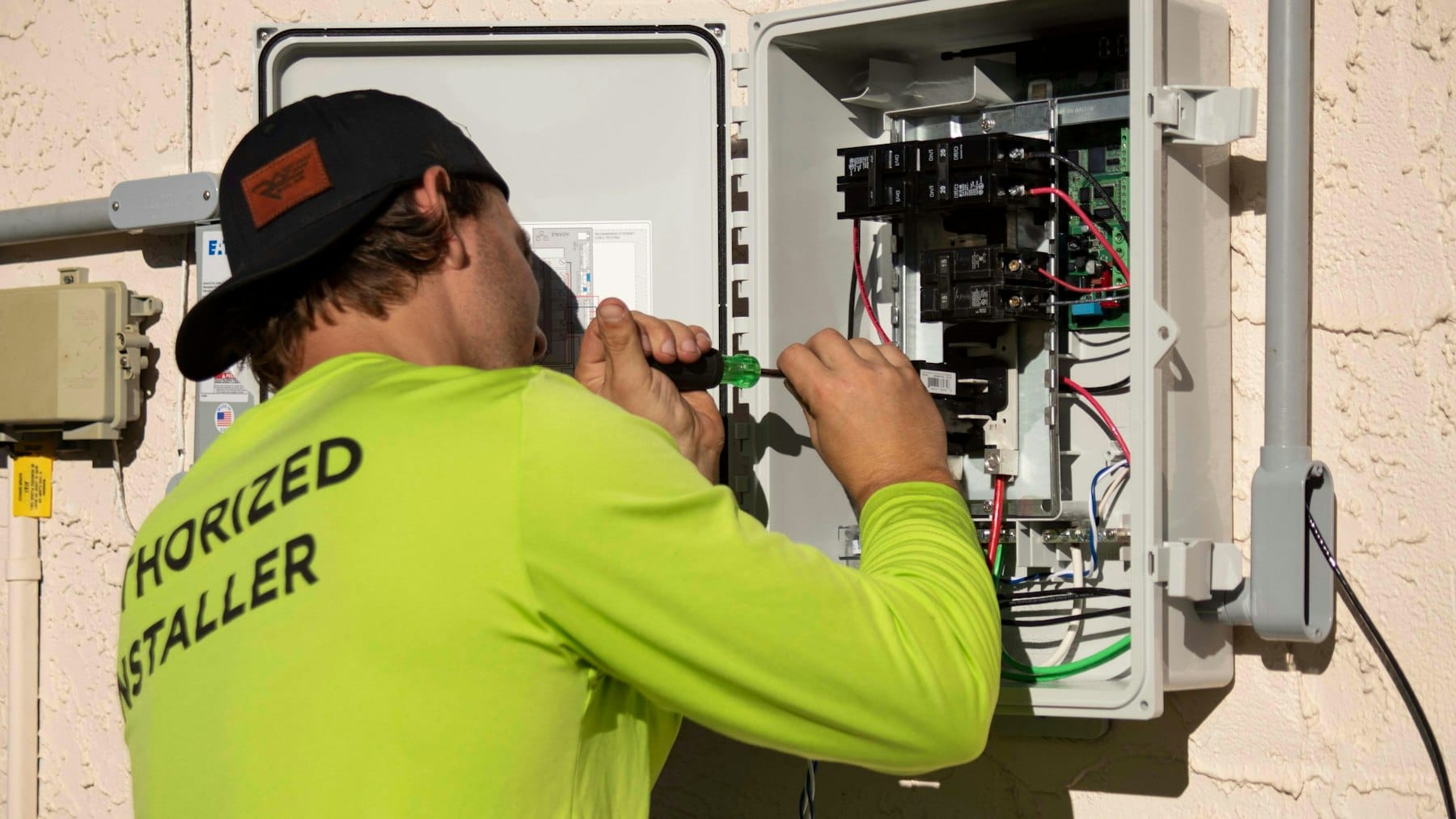
Electrical Installation Technician Training: 6 Months
This 6-month programme goes further than the 3-month course: residential and commercial installation, distribution and three-phase, an introduction to inverter and generator changeover, drawings, and a portfolio of supervised work. Next cohort to be announced: register your interest and we will contact you.
Quick facts
No cohort has been scheduled. Register your interest and we will contact you. Next cohort to be announced.
- Duration
- 6 months
- Fee
- ₦400,000
- Location
- Abuja, FCT, Nigeria
- Who it is for
- Beginners and improvers who want deeper installation skills, including backup power and commercial work
- Experience
- No experience needed; the programme starts from the basics
- Schedule
- To be confirmed with each cohort
- Accommodation
- Not provided
- Transportation
- Not provided
- Personal tools
- Recommended
- Certificate
- Programme completion certificate, subject to attendance and assessment
- People who want a deeper electrical skill set without a 2-year commitment
- Graduates of the 3-month programme who want to go further
- Electricians who want to formalise and widen their skills
- Technical school graduates and engineering students
- Anyone preparing for the apprenticeship or a technician role
Who should not apply
- Anyone who needs accommodation, feeding or transport to be provided
- Anyone expecting the programme to guarantee a job at the end
- Everything in the 3-month programme, in more depth
- Commercial and light industrial wiring methods
- Three-phase distribution and protection
- Introduction to inverter, battery and generator changeover wiring
- Panel and distribution board assembly
- Reading drawings and preparing material lists
- Maintenance and fault-finding routines
- How to document and present your work
The 6-month programme, month by month
Months 1 to 2
Foundations and residential wiring
- Electrical safety, tools and measuring
- Cables, terminations and conduit
- Lighting, socket and appliance circuits
- Earthing basics
- Wiring a complete small home
Month 3
Distribution and protection
- Distribution board layout, assembly and labelling
- Breakers, RCDs and fuses
- Load calculation and cable sizing basics
- Single-phase and three-phase
Month 4
Backup power introduction
- Inverter and battery system layout (introduction)
- Generator and changeover wiring
- Protection and earthing for backup systems
- Safe commissioning steps
Month 5
Commercial installation and maintenance
- Trunking, tray and conduit systems
- Small commercial and office installations
- Panel basics
- Preventive maintenance and fault-finding
Month 6
Drawings, testing and portfolio
- Reading drawings and listing materials
- Testing and commissioning (supervised)
- Documentation and handover
- Supervised project work, where active work and safety allow
- Final practical assessment and portfolio
You work on training boards and, where active work and safety allow, on supervised projects. Exposure to real jobs is not guaranteed.
- Wiring residential and small commercial circuits
- Assembling a distribution board
- Wiring a changeover arrangement
- Testing, fault-finding and documentation
- Able to attend the full 6 months in Abuja
- No technical experience needed
- Willing to follow electrical safety rules
- Basic reading, writing and arithmetic
What should I bring?
Technical training is practical, so plan to have your own basic tools. Having them from the start helps you learn to look after them and to work in a professional way.
Applicants are strongly advised to get their basic personal tools before training begins. You do not need expensive specialist equipment; specialist equipment may be provided or made available for supervised activities.
Must have
Basic tools you are expected to get.
- Tape measure (5 m or 7.5 m)
- Spirit level
- Steel rule
- Marker pen
- Pencil
- Flat and Phillips screwdrivers
- Combination pliers
- Long-nose pliers
- Side cutters
- Wire stripper
- Cable cutter
- Utility knife
- Adjustable spanner
- Small spanner set
- Hex key set
- Hammer
- Hacksaw
- File
- Tool pouch or tool bag
- Notebook and calculator
- Plumb line or plumb bob where required
Strongly recommended
Useful tools that improve your practical learning.
- Digital multimeter suitable for supervised use
- Non-contact voltage detector
- Insulated screwdrivers
- Crimping tool and terminal crimper
- Torpedo level and measuring square
- Fish tape or cable pulling tape
Provided or available during supervised work
You do not need to buy these.
- Required PPE for practical work, as the site and programme require
- Supervision and instruction
- Company or site equipment, used only with authorisation and supervision
Specialist equipment
Do not buy unless you are specifically asked.
- Insulation resistance testers, earth testers and power-quality analysers
- Clamp meters beyond basic use
- Any other specialist test equipment, unless you are specifically asked
Abuja, FCT, Nigeria
Training is in Abuja, FCT. We do not provide accommodation, feeding or transport.
- Attend every scheduled session and practical activity
- Arrive on time
- Repeated absence can affect assessment and certificate eligibility
A final practical project, a portfolio and a short oral assessment.
- Planning and wiring an installation
- Building a distribution board
- Testing and fault-finding
- Documenting the work and presenting the portfolio
Fees, what is provided and what to expect
₦400,000
6 months
Payments are non-refundable once acceptance or training has commenced, whichever occurs first.
Programme fees are separate from personal expenses such as accommodation, feeding, transportation and personal tools, unless a programme page says otherwise.
Pay only through the official payment instructions sent to you after acceptance. Do not pay an individual or an unofficial account.
What we provide
- Supervision and practical instruction, according to the programme
- Required PPE for practical work, as the site and programme require
- Specialist equipment for supervised activities, subject to availability
What you provide
- Accommodation
- Feeding
- Daily transportation
- Relocation
- Personal tools and personal items
- Personal living expenses
Accommodation, feeding, relocation assistance and transportation are not provided. Applicants are responsible for their own arrangements and personal expenses.
Employment and certification
Completing a training programme does not guarantee employment with us.
A completion certificate confirms completion of the relevant programme requirements. It is not a government licence, COREN registration, NEMSA competency certification, a professional engineering registration or a manufacturer-authorised installer certification. Anyone who needs statutory or professional certification must complete that external process separately.
Common questions
How much does the electrical technician, 6 months cost?
The fee is ₦400,000 for the 6 months programme. Payment is made only after acceptance, through the official payment instructions.
Where is the training held?
In Abuja, FCT.
When does the next cohort start?
No cohort has been scheduled yet. Next cohort to be announced. Register your interest and we will contact you.
Do I need previous experience?
No experience needed; the programme starts from the basics. Beginners should say so in the form.
What tools do I need?
Basic hand tools. See “What should I bring?” on this page. You do not need to buy specialist equipment.
Can I do the 3-month programme first?
Yes. Many people start with the 4-week foundation or the 3-month programme, then continue. Ask us about fee credit when you register; anything agreed is confirmed in writing before you pay.
Is accommodation or transport provided?
No. Accommodation, feeding, relocation assistance and transportation are not provided.
Do I get a certificate?
Successful participants may receive our programme completion certificate, subject to attendance and assessment. It is not a COREN or NEMSA qualification.
Does the programme guarantee a job?
No. Completing a training programme does not guarantee employment with us.
Is the fee refundable?
Payments are non-refundable once acceptance or training has commenced, whichever occurs first.
Register your interest
Tell us about yourself. We will contact you when the next cohort is confirmed. Registering costs nothing.
Register your interest
Fill in the short form on this page with accurate details.
We review it
A member of the team reads every registration and checks it against the entry requirements.
Assessment or interview where needed
Some programmes use a short interview or a practical discussion before a place is offered.
Acceptance and payment instructions
Accepted applicants receive the programme details and the official payment instructions. Pay only through those.
Orientation and start
You receive reporting, attendance, tools, safety and programme information before the first day.
Questions first? Contact the team. Your details are used as described in our Privacy Policy.
Related programmes and pages
- Electrical Technician, 3 months The shorter installation programme.
- Electrical Apprenticeship in Abuja The 2-year or 4-year structured route.
- Solar Technician Training Add solar and inverter skills.
- All Careers and Training Compare every programme side by side.
Programme information reviewed by the engineering team.
Questions before you apply?
Call or email the team and we will point you to the right programme.